


Building a scalable Laboratory Information System for modern diagnostics

About the project
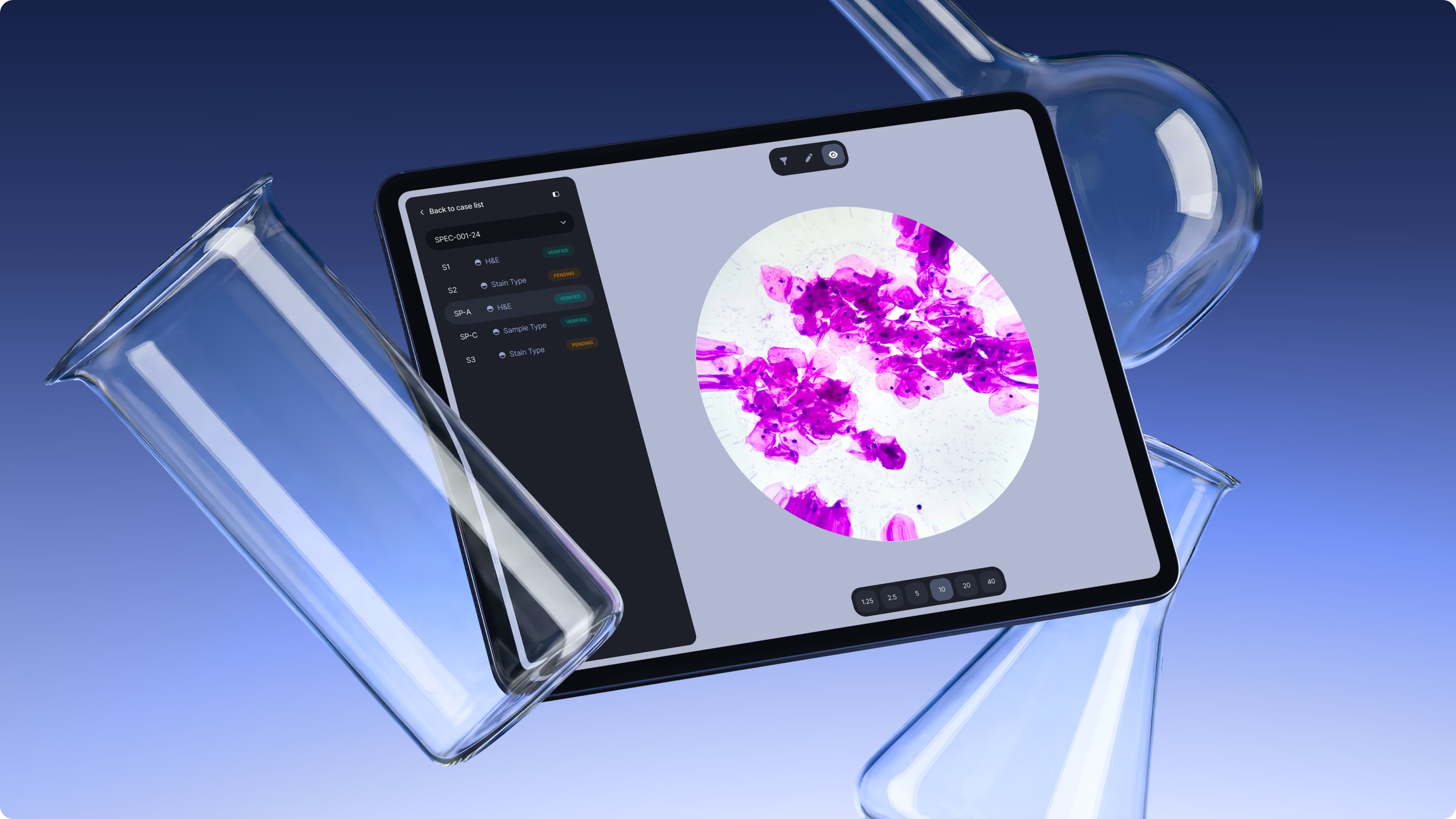
The Laboratory Information System (LIS) is a large-scale web app for medical labs, allowing staff to manage patient samples, track analyses, process results, and generate reports. It also supports metadata configuration, image capture, and decentralized management for multi-branch hospitals and referring doctors.
Designed as a modular and configurable platform, LIS adapts to the operational needs of different laboratories, roles, and workflows. Its architecture supports long-term scalability, allowing healthcare organizations to standardize diagnostic processes while remaining flexible to regulatory requirements, future feature expansion, and multi-location growth.

Challenge
A legacy LIS with performance issues, fragmented workflows, and limited scalability hindered daily operations. The client required a modular, UX-driven platform with clear architecture and documentation to support diagnostic teams and scale across labs and hospital branches.
Our process
Given the complexity of diagnostic workflows and regulatory context, our process focused on aligning UX, system logic, and architecture from day one.

Results
The new Laboratory Information System established a scalable foundation for daily diagnostic workflows. With a modular architecture and improved documentation, the platform supports smoother collaboration across labs, faster sample handling, and easier onboarding for new developers. Core modules such as patient management, test accessioning, insurance, and physician records were successfully launched, creating a strong base for future reporting and billing.
Our approach
Our approach focused on translating complex diagnostic operations into a clear, scalable system supported by robust UX and architecture.