 AI in Healthcare
Founders
Building practical AI products for modern healthcare.
Building practical AI products for modern healthcare.

Moving hospital AI pilots into reliable production.

Bringing practical AI safely into everyday patient care.



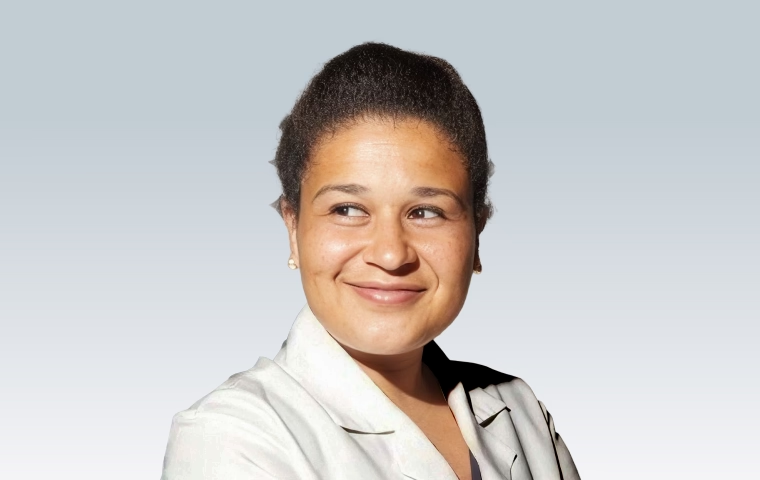
AI Tech Leader who has deployed real AI solutions at Seattle Children's Hospital and SickKids Toronto.

Hosted by Sergiy Sumnikov
General Manager, Health Innovation at Halo Lab
Most pilots run on curated data and supervised conditions. The gap to production lives in everything that gets stripped out of that environment.
Start with the decisions clinicians need to make, the information they use, and the time they have. A useful AI feature fits into that workflow, makes its limitations clear, and leaves responsibility for the next step with the care team.
A strong benchmark cannot compensate for missing, inconsistent, or outdated data in everyday use. Before comparing models, define the data sources, check their quality, and establish how changes will be detected and reviewed.
Moving beyond a prototype means connecting the product to real systems and real operating constraints. Plan for access permissions, unavailable services, monitoring, and support so the workflow remains usable when something goes wrong.
When approved tools do not meet everyday needs, teams may turn to unofficial alternatives. Understand those unmet needs and provide an accessible, supported path that makes data handling, ownership, and review responsibilities clear.




Become a part of our growing community of innovators.